
Need for Speed Most Wanted
ELECTRONIC ARTSRacing
3.814.25K Reviews
- Version
- 1.3.128
- Installs
- 1.00M
- Age Rating
- Everyone 10+
Screenshots
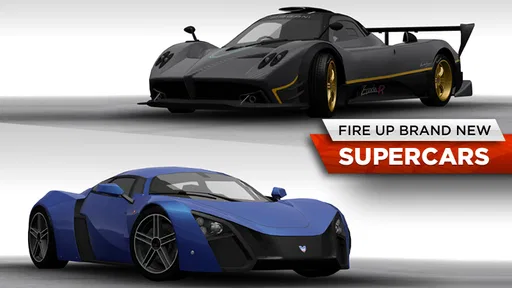
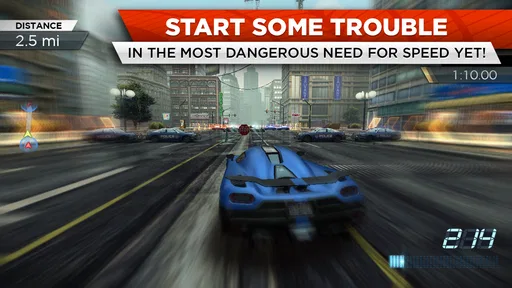
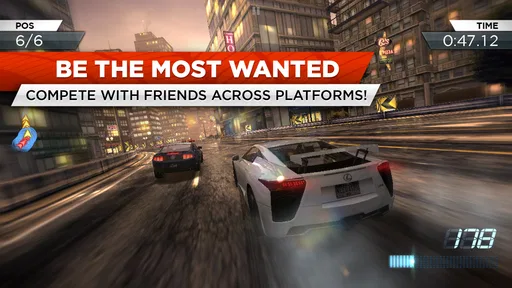
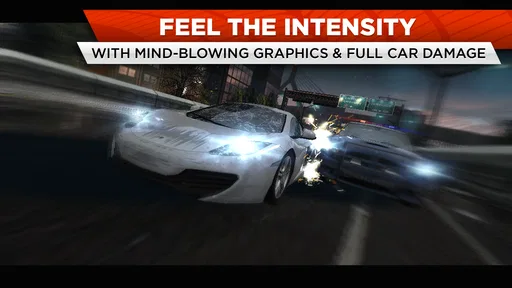
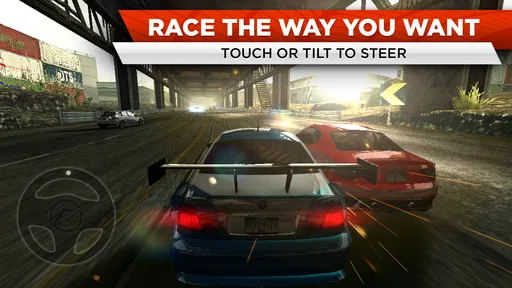
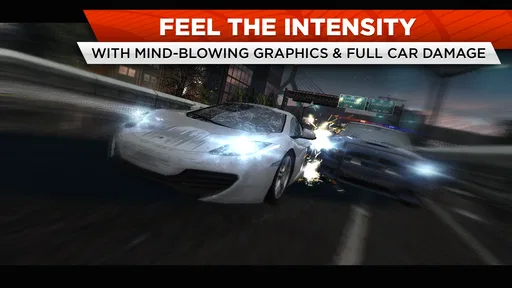
Our Review of Need for Speed Most Wanted
 Analysis by Appyee
I approached Need for Speed Most Wanted as a premium mobile racing game rather than a quick free download, and that distinction shaped my whole experience. It is built for players who want fast street races, dramatic traffic dodges, and the familiar Need for Speed attitude in a compact format. I found it most enjoyable in short bursts, when I could pick up the phone, choose a car, and immediately focus on aggressive driving instead of learning a complicated simulation system.
The game comes from ELECTRONIC ARTS and sits in the racing category, with an age rating of Everyone 10+. It costs $4.99 to download and also includes optional in-game purchases priced from $2.99 to $24.99 per item. That combination makes the buying decision important: this is not simply a free trial with a racing theme, but it still has extra spending built into the experience. The mobile release arrived on Oct 29, 2012, and its current version is 1.3.128, so this is an established title rather than a newly launched experiment.
How the current mobile experience feels
The first thing I noticed is how direct the driving is. Need for Speed Most Wanted does not ask me to spend several minutes tuning a vehicle before I can enjoy a race. The focus is on speed, positioning, and reacting to what appears ahead. That makes it approachable for someone who normally avoids realistic racing games, while still giving experienced players enough pressure to stay engaged when traffic and opponents turn a clean run into a scramble.
Its strongest quality is momentum. A good race tends to create a rhythm: accelerate, choose a line, slip past a vehicle, take a corner with just enough control, and then make a risky decision when an opponent appears beside me. I like that the game encourages movement rather than passive driving. Sitting safely behind another car rarely feels as satisfying as taking a narrow opening and gaining ground through timing.
The presentation also supports that feeling. The game aims for a dramatic, high-speed street-racing mood instead of a quiet driving lesson. Even when I am only playing for a few minutes, the visual style and pace make the session feel more like an event. That is useful on a phone because mobile games often struggle to make short sessions feel meaningful. Here, one race can provide a complete burst of action without requiring a long commitment.
Still, I would not describe the handling as a full simulation. The game is better suited to players who enjoy accessible arcade racing. If you want detailed tire behavior, extensive vehicle setup, or a slow learning curve built around precision, a dedicated simulator will probably be a better fit. This release is more interested in the sensation of escaping, overtaking, and surviving a fast road than in reproducing every technical detail of motorsport.
Controls that reward quick decisions
On a touchscreen, the main challenge is not learning a large control scheme; it is maintaining control while the race becomes crowded. I found that the best results came from looking farther ahead than I initially wanted to. Watching only the car directly in front of me made sudden traffic feel unfair, while scanning the road early gave me time to select a safer gap or prepare for a change in direction.
That is one of the less obvious skills in this game: speed alone is not enough. The fastest route is often the one that leaves room for correction. When I chased every possible shortcut or tried to pass through every narrow gap, I lost more time through collisions and recovery than I gained from the aggressive move. A slightly conservative line can be faster over a whole race, especially when the road is busy.
I also recommend treating the opening moments of a race as a setup period rather than immediately spending all of my attention on overtaking. Establishing a stable line early makes it easier to read the next group of traffic. This sounds simple, but it changed my results more than repeatedly attempting dramatic passes. The game rewards confidence, but careless confidence quickly turns into lost momentum.
Why the short-session format works
A realistic everyday use case is a commute break, a few minutes before an appointment, or a quick evening session when I do not want to start a long console-style game. The racing structure makes that practical. I can play with a clear objective instead of wandering through a large open-ended system, and the immediate action suits a phone better than a game that requires a long setup routine.
That convenience has a trade-off. Because the experience is so focused on racing intensity, it may feel repetitive to anyone who needs a broad range of activities, deep story scenes, or a large social layer. I would choose this over a slower racing game when I want instant action, but I would choose a more expansive alternative when I want exploration or a stronger sense of long-term variety.
What the release history tells me about its evolution
The release date places this version in an earlier generation of mobile gaming, but the current version number shows that the product has continued through updates rather than remaining exactly as it was at launch. I see that as useful context for new players: the game has had time to settle into its mobile identity, yet it should still be approached as a classic mobile adaptation rather than a modern live-service racer built around constant reinvention.
I am careful not to confuse a version number with a promise of a particular feature set. The current version is 1.3.128, but that fact alone does not tell me that every modern expectation has been added. What it does suggest is that the game has moved beyond its original release state. For an existing user, the practical lesson is to keep the installed version current before judging the experience, especially if an older installation feels rougher or less compatible with a newer device.
The age of the release also explains some of its design priorities. The game feels built around a concentrated racing loop instead of the layered progression systems common in newer mobile titles. I appreciate that focus because it keeps the action readable. At the same time, players accustomed to frequent events, seasonal content, or highly detailed customization may find the overall structure less ambitious than current alternatives.
For someone deciding whether to install it now, I would frame the evolution this way: the game’s identity has remained tied to arcade street racing, while its continued version history makes it more practical than an untouched launch build. I would not buy it expecting a completely new direction. I would buy it because the core style still matches what I want from a mobile Need for Speed experience.
What existing users should expect from the current build
If I were returning after a long break, I would first check whether the game runs comfortably on my device and then spend a few races reacquainting myself with the controls. The minimum operating system is Android 4.1, which reflects the broad compatibility target associated with its era. That does not guarantee identical performance on every modern phone, but it does show that the game was designed to reach a wide range of Android hardware.
Returning players should also remember that familiarity can create bad habits. After time away, I tended to drive too aggressively because I remembered the excitement but not the timing. A better restart is to use early races to rebuild awareness of traffic patterns and braking points. The game becomes more enjoyable once I stop treating every corner as an opportunity for a spectacular move.
The optional purchases deserve attention as well. The store summary explicitly notes in-game purchases, and the listed range reaches $24.99 per item. I consider that a significant part of the ownership decision, even though the initial price is only $4.99. My advice is to decide in advance whether I am willing to spend beyond the download price. If not, I would treat the paid entry as the complete budget and avoid letting optional items define the experience.
That approach is especially helpful for younger players. The Everyone 10+ rating communicates that the game is aimed at a broad audience with some age guidance, but it does not remove the need for purchase awareness. Anyone sharing a device should understand that the game includes optional spending before handing it to a child or allowing unsupervised play.
Where the game still leaves gaps
The biggest limitation for me is depth outside the central racing appeal. The game is effective when I want speed, but it is not the ideal choice if my priority is a highly detailed garage, a realistic driving model, or a constantly changing competitive environment. Those are not minor preferences; they affect whether the game feels satisfying after the novelty of the first sessions wears off.
I also think the premium price can create a higher expectation than the game’s age and structure can fully meet. Paying $4.99 makes sense when I specifically want this style of arcade racing, but it is harder to justify if I am comparing it with free racers that offer broader content at the start. The additional in-game purchases make that comparison more complicated. I would rather pay once for a focused game than deal with endless interruptions, but I still want to know exactly what kind of focused experience I am buying.
Another gap is suitability for players who prefer relaxed driving. The game’s appeal comes from pressure and risk, so it is not the best companion for someone looking for a calm scenic ride. Even when I tried to play conservatively, the design kept pulling me toward faster decisions. That is exciting when I am in the mood for it, but tiring when I want something gentle.
There is also a difference between playing on a modern phone and playing on an older compatible device. The minimum operating system requirement is low, but operating-system compatibility is not the same as a guarantee of ideal comfort. Screen size, touch response, battery condition, and available storage can all affect how enjoyable a fast racing game feels. I would not judge the title only by its age rating or operating-system requirement; I would consider the actual device I plan to use.
Who should choose it over other racing games?
I would recommend this game to someone who wants a recognizable arcade racing experience with an immediate sense of danger. It suits players who enjoy weaving through traffic, taking calculated risks, and replaying races to improve their decisions. It is also a sensible choice for a fan of the Need for Speed style who prefers a paid download to a game that constantly asks for attention through notifications or timed activities.
I would steer a different player elsewhere. If you want licensed motorsport structure, serious simulation physics, a large open world to explore, or deep online competition as the main attraction, another racing game will likely serve you better. Likewise, if your budget is strictly zero, the $4.99 entry price makes this a poor match even before considering the optional purchases. The game is most convincing when its focused arcade identity is exactly what the player is seeking.
Compared with a typical free-to-play racer, this title feels more concentrated and less dependent on a long sequence of menus. Compared with a console-style racer, it is easier to fit into a short mobile session but naturally offers a different scale of experience. That middle position is its real value: it gives me a strong dose of street-racing energy without asking me to commit to a full-length gaming session, while also avoiding the expectation that it will replace a dedicated racing platform.
My buying advice and what I would watch next
The public response is mixed but substantial, with an average rating of 3.8 from around 47 thousand ratings and roughly 14 thousand written reviews. The game has also passed one million installs, which tells me it has found a sizable mobile audience. I do not treat those figures as proof that everyone will enjoy it, but they do support the impression that this is a known, established release rather than an obscure experiment.
For my own decision, I would ask one question first: do I want arcade street racing specifically, or do I simply want any racing game? If the answer is the former, the purchase is easier to defend. The quick races, aggressive atmosphere, and accessible handling work together well. If the answer is the latter, I would compare the price, optional purchases, and desired depth against newer alternatives before spending anything.
I would also watch how the current version behaves on my particular device rather than assuming that the old minimum requirement tells the whole story. A stable installation, comfortable touch response, and enough battery life matter more to a fast racing game than a long feature list. Before settling into a serious play session, I would run a few races and decide whether the controls feel natural in my hands.
My final view is positive but specific. Need for Speed Most Wanted is not a universal recommendation, and I would not present it as a replacement for every modern racing game. I recommend it to friends who want compact, high-pressure arcade races and are comfortable with a $4.99 purchase that includes optional in-game spending. Its best feature is the way it turns a short phone session into a tense driving challenge without burying the action under unnecessary complexity. For that particular player, it remains a worthwhile mobile racer; for everyone else, its age, focused structure, and purchase model are reasons to think carefully before downloading.
Verdict
Strengths of Need for Speed Most Wanted
- Fast, responsive controls make high-speed races feel exciting.
- Wide range of licensed cars with noticeable performance differences.
- Police pursuits add tension and variety beyond standard races.
- Career progression provides plenty of events and car upgrades.
- Works well on many modern Android and iOS devices.
Limitations of Need for Speed Most Wanted
- The game is a paid download with no free trial version.
- Touch controls can feel imprecise during tight corners.
- Some races become repetitive after extended play sessions.
- Limited customization compared with newer racing games.
- Large game size may consume considerable storage space.
Other Releases by ELECTRONIC ARTS
View All
Plants vs. Zombies™
Strategy3.7

EA SPORTS FC Soccer Mobile 26
Sports4.6

EA SPORTS™ NBA LIVE Mobile
Sports4.1

SimCity BuildIt
Simulation4.1
Similar Picks in This Category
View All
Hill Climb Racing
Fingersoft4.3

Dr. Driving
SUD Inc.4.2

Traffic Rider
skgames4.5

Asphalt 8 - Car Racing Game
Gameloft SE4.6

Race Master 3D: Car Racing
Beresnev Games4.6

Extreme Car Driving Simulator
AxesInMotion Racing4.3
Frequently Asked Questions
What is Need for Speed Most Wanted about?
Need for Speed Most Wanted is an arcade-style street racing game focused on high-speed races, police pursuits, and building a reputation through increasingly difficult events. You compete against rival drivers, unlock faster cars, and attempt to defeat the city’s most wanted racers. The game emphasizes aggressive driving, shortcuts, crashes, and dramatic escapes rather than realistic simulation.
Is Need for Speed Most Wanted available on Android and iOS?
Availability can depend on your country, device, and the specific version being offered. The mobile edition has been released for Android and iOS in different periods, but it may not appear in every store or may be incompatible with newer operating systems. Before downloading, check the official Google Play Store or App Store listing for supported devices, current requirements, price, and publisher information.
Does the game require an internet connection to play?
Need for Speed Most Wanted is primarily designed as a single-player racing experience, so many of its main events can generally be played without a constant internet connection after installation. However, an internet connection may be required for the initial download, updates, license verification, advertisements, cloud features, or online-related services. Requirements can vary by platform and version, so review the store listing before traveling or playing offline.
Does Need for Speed Most Wanted include in-app purchases or advertisements?
The mobile version’s pricing and monetization can vary depending on the release and store region. Some editions have been sold as a premium game, while other versions or related releases may include optional purchases, advertisements, or additional content. Check the current store page carefully before installing, especially the sections describing in-app purchases, data collection, and payment requirements, because these details may change over time.
What devices are recommended for a smooth experience?
A relatively modern Android phone, iPhone, or iPad with sufficient free storage and updated system software is recommended for smoother performance. Racing games can be demanding because they display detailed cars, traffic, environments, and visual effects at speed. Older devices may experience longer loading times, reduced frame rates, heat, or compatibility problems. Always compare your device with the official minimum requirements before downloading.
Play our best games!


